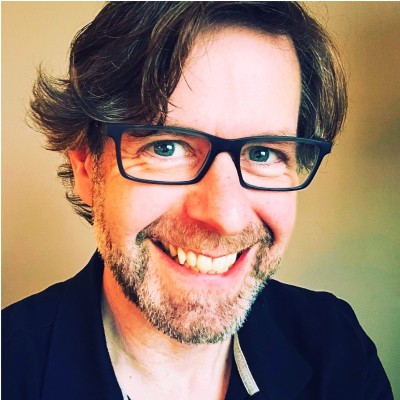
 Paul Hobson
I’m Paul Hobson — a technology leader based in Calgary, working at the intersection of platform engineering, enterprise architecture, and organisational design.
My career has been spent in complex, large-scale technology environments: energy infrastructure at Plains, airline operations at WestJet, higher education at the University of British Columbia and Cardiff University. The problems that interest me aren’t purely technical — they’re about how organisations build and sustain the capability to use technology well. That’s a harder problem than it looks, and it’s one I keep finding myself in the middle of.
I write here about what I’m thinking about: platform strategy, architectural decision-making, the relationship between technology and organisational structure, and occasionally the broader landscape of how technology is changing the industries I’ve worked in.
Background
My first encounter with the economics of disruption was practical rather than theoretical. As a research assistant doing my PhD in the Earth Observation group at Swansea University in the mid-1990s, the group needed more compute — the Sun Microsystems Sparc workstations we relied on for geospatial analysis were increasingly the constraint. The problem was budget: Sparc workstations were expensive, and the group couldn’t afford to expand the estate.
The solution turned out to be Slackware Linux and commodity PC hardware. Learning early Linux and building bespoke workstations from the ground up, we eventually replaced five Sparc 5s with fifteen dual-CPU Linux machines for roughly the same price — and the Linux boxes were substantially faster. We got three times the compute for the cost of parity, plus room left over. That eventually extended to Beowulf clustering, building a basic parallel processing capability from commodity parts at a time when that kind of infrastructure was otherwise accessible only to well-funded labs.
The lesson wasn’t really about Linux. It was about what happens when you stop asking “how do we get more of what we have” and start asking “what are we actually trying to do?” The constraint was budget, not a requirement for Sparc hardware specifically. Recognising that distinction unlocked a completely different set of options.
That early experience of research computing also put me in the middle of a different kind of lesson. In August 1997 I gave my first international conference presentation — at IEEE IGARSS in Singapore — on results from POLDER, a French instrument aboard the Japanese ADEOS satellite. I walked out of the session to find colleagues gathered around the bulletin board reading a notice from NASDA, the Japanese space agency: ADEOS had lost power five weeks earlier when a solder joint on the solar paddle fractured. The instrument I had just presented results from had been dead for a month. There is not much you can do about a failed satellite. It is 800 kilometres away and the fault is physically inaccessible. It taught me something about the difference between systems you can reach and systems you can’t — a distinction that feels increasingly relevant in the context of industrial operational technology.
Since then I’ve led technology strategy and enterprise architecture across four organisations spanning energy, aviation, and higher education. The throughline is complex operational environments where software, infrastructure, and physical systems intersect — and where the technology decisions carry real consequences.
At the moment my work is focused on technology platform strategy in large operational environments at Plains.
Other work
I run several other publishing properties alongside this site:
- Wayward House — long-form writing on geography, modelling, and computational science
- Sub Haus — home lab, open infrastructure, and technology experiments
Contact
For consulting enquiries, collaboration, or just a conversation — use the contact page or find me on LinkedIn.